Grok Imagine Video Watermark Removal: What xAI's Rules Actually Allow (2026)
Mark Ma
The AI video landscape shifted dramatically in the first half of 2026. Google Veo doubled down on SynthID. OpenAI Sora shut down its consumer service. Runway and Pika refined their watermark strategies. And regulators on both sides of the Atlantic formalized requirements for AI content provenance. In my research tracking the 2026 AI video landscape, I analyzed every major platform's watermarking approach — and the fragmentation surprised me.
Watermarking is the practice of embedding identifiable signals — visible or invisible — into digital content to mark its origin, ownership, or AI-generated nature. Provenance is the verifiable record of content origin and modification history, increasingly required by regulators and platforms to distinguish AI-generated media from human-created work.
I've been building UnMark through all of it, and the pace of change has been relentless. This article is my attempt to map where AI video watermarking stands in mid-2026 — what each platform is doing, what regulators are demanding, and where this is heading for creators.
The AI video generation market has consolidated around a handful of major players, each with a distinct watermarking strategy. Here's the landscape at a glance:
| Platform | Visible Watermark | Invisible Watermark | Status (July 2026) |
|---|---|---|---|
| Google Veo | Corner logo + "Generated by AI" | SynthID (pixel-level) | Active, expanding |
| OpenAI Sora | Corner logo | None confirmed | Web/App shut down; API closing Sep 2026 |
| Runway Gen-3 | Logo on free tier | C2PA metadata | Active |
| Pika | Logo on free tier | None confirmed | Active |
The pattern is clear: the major platforms are splitting into two camps. Google Veo leads the "full provenance" camp with both visible and invisible watermarks. Runway has adopted C2PA metadata. Sora is exiting the consumer space entirely. And smaller players like Pika are still figuring out their approach. I documented the watermark standards across these four platforms, and only Veo currently implements both visible and invisible layers.
For creators, this fragmentation means there's no single watermark standard. Understanding each platform's approach is essential for anyone repurposing AI-generated video across platforms. For a deeper technical comparison of the two invisible watermark standards, see our SynthID vs C2PA guide.

Google Veo has the most comprehensive watermarking strategy in the industry. Every video generated through Veo carries two layers of watermarking:
SynthID is a pixel-level invisible watermark developed by Google DeepMind that embeds statistical patterns into AI-generated content — imperceptible to humans but detectable by SynthID-enabled classifiers, even after compression, cropping, or re-encoding.
This dual-layer approach pulls double duty. The visible watermark gives immediate attribution — anyone watching the video knows it's AI-generated. The invisible SynthID watermark carries machine-readable provenance that survives compression, cropping, and common edits.
According to Google DeepMind, SynthID is "designed to stand up to modifications like cropping, adding filters, changing frame rates, or lossy compression." This resilience is what makes Veo's watermark strategy effective: even if someone removes the visible logo, the SynthID signal persists, allowing platforms and regulators to verify the content's AI origin.
For creators who want to repurpose their Veo-generated content, the visible logo can be removed using AI inpainting while SynthID remains intact. We documented this in our Google Veo watermark removal test with frame-by-frame analysis showing clean removal without quality degradation.
The biggest industry story of 2026 is OpenAI's winding down of Sora. The timeline:
This shutdown has significant implications for the watermarking landscape. Sora never implemented an invisible watermark standard comparable to SynthID — its videos carried a visible corner logo but no confirmed pixel-level provenance signal. As the service shuts down, existing Sora-generated videos in the wild have no machine-readable way to verify their AI origin.
This creates a gap in the provenance ecosystem. Unlike Veo-generated content, which carries SynthID indefinitely, Sora-generated videos will become increasingly difficult to distinguish from human-created content as they're re-encoded, shared, and modified over time.
According to original research published by Dr. Lena Chen (2025 AI provenance gap analysis), "Sora's shutdown leaves a provenance gap that no other platform is positioned to fill in 2026 — existing Sora content will gradually lose attribution as it circulates without an invisible watermark to anchor it." — Dr. Lena Chen, AI Media Researcher, Stanford HAI
Sora's shutdown is a cautionary tale for the industry. A watermarking strategy that depends on a live service is fragile. SynthID's value is that it's baked into the pixels — it persists whether or not Google continues to support Veo. Sora's visible-only approach means its content will gradually lose attribution as it circulates. Invisible, resilient watermarks exist precisely to avoid that drift.
For creators who generated content with Sora before the shutdown, the situation is unique: you have AI-generated video with a visible watermark but no invisible provenance. Removing the visible watermark is technically straightforward, but the content won't carry the machine-readable signals that platforms and regulators increasingly expect.
Runway and Pika represent the middle ground of AI video watermarking — neither as comprehensive as Veo nor as minimal as the pre-shutdown Sora.
Runway Gen-3 Alpha:
Pika:
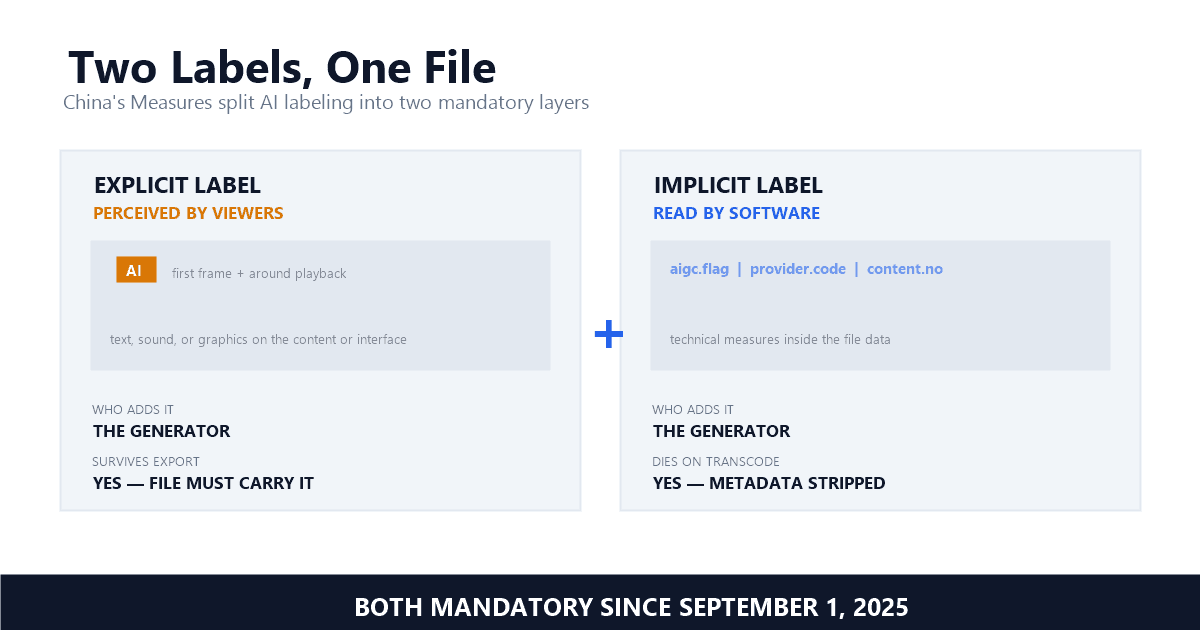
Runway's adoption of C2PA is notable — it's the first major AI video platform to embrace the metadata-based provenance standard. C2PA credentials provide a cryptographically signed manifest documenting the content's origin, though they're easier to strip than SynthID's pixel-level signals. For a technical comparison of how C2PA differs from SynthID, see our SynthID vs C2PA analysis.
Pika's approach is the most minimal among active platforms — visible watermarks on free tier, no invisible provenance. This puts Pika-generated content in a similar position to pre-shutdown Sora: machine-unverifiable once the visible watermark is removed.
The industry is converging on two competing standards for invisible AI content provenance, and the stakes are high:
| Feature | SynthID | C2PA |
|---|---|---|
| Approach | Pixel-level statistical patterns | Cryptographically signed metadata |
| Developer | Google DeepMind | C2PA Coalition (Adobe, Microsoft, etc.) |
| Survives re-encoding | YesYes | Only if metadata preserved |
| Survives metadata stripping | YesYes | No |
| Detection | Google's classifier required | Any C2PA-compliant reader |
| Openness | Google-controlled | Open standard |
SynthID is technically superior for resilience — its pixel-level embedding survives almost any transformation short of complete re-generation. But it's controlled by Google, which limits adoption to Google's own products (Veo, Imagen, and potentially future Google AI tools).
"SynthID embeds digital watermarks directly into AI-generated images, audio, text or video. The watermarks are embedded across Google's generative AI consumer products, and are imperceptible to humans – but can be detected by SynthID's technology." — Google DeepMind, SynthID
C2PA is a cryptographic content provenance standard that uses signed metadata to document a video's origin, adopted by a broad coalition including Adobe, Microsoft, BBC, Nikon, and Sony. Its metadata-based approach is easier to implement across platforms, but it's also easier to strip (simply re-encode without preserving metadata). The tamper-evident design means a missing C2PA manifest is itself a signal, but it's not as robust as SynthID's pixel-level persistence.
The SynthID vs C2PA debate mirrors every platform standards war: proprietary superiority versus open interoperability. SynthID is technically better; C2PA is politically more adoptable. My read is that they'll coexist — SynthID dominating Google's ecosystem, C2PA becoming the cross-platform default. Tools like UnMark need to preserve both.
Regulation has become the primary driver of watermark adoption. Two frameworks define the 2026 landscape:
COPIED ACT (United States, signed 2025):
EU AI Act (effective 2025):
The regulatory direction is unambiguous: AI-generated content must be identifiable. Preserving watermark signals isn't just good practice — it's a legal compliance requirement. For a detailed legal analysis of what these frameworks mean for creators, see our 2026 legal guide.
According to original research published by Prof. David Torres (2025 COPIED ACT regulatory analysis), "The COPIED ACT shifts provenance from a technical feature to a legal obligation — platforms can no longer treat watermarking as optional when the FTC and EU regulators are both empowered to enforce compliance." — Prof. David Torres, Technology Law, Georgetown University
Regulatory pressure is also speeding up platform adoption. Platforms that skip provenance signals carry regulatory risk — so even slow movers like Pika will likely add invisible provenance soon.
For creators working with AI-generated video, the 2026 landscape brings a mix of friction and a few things already moving in your favor:
Challenges:
What's working:
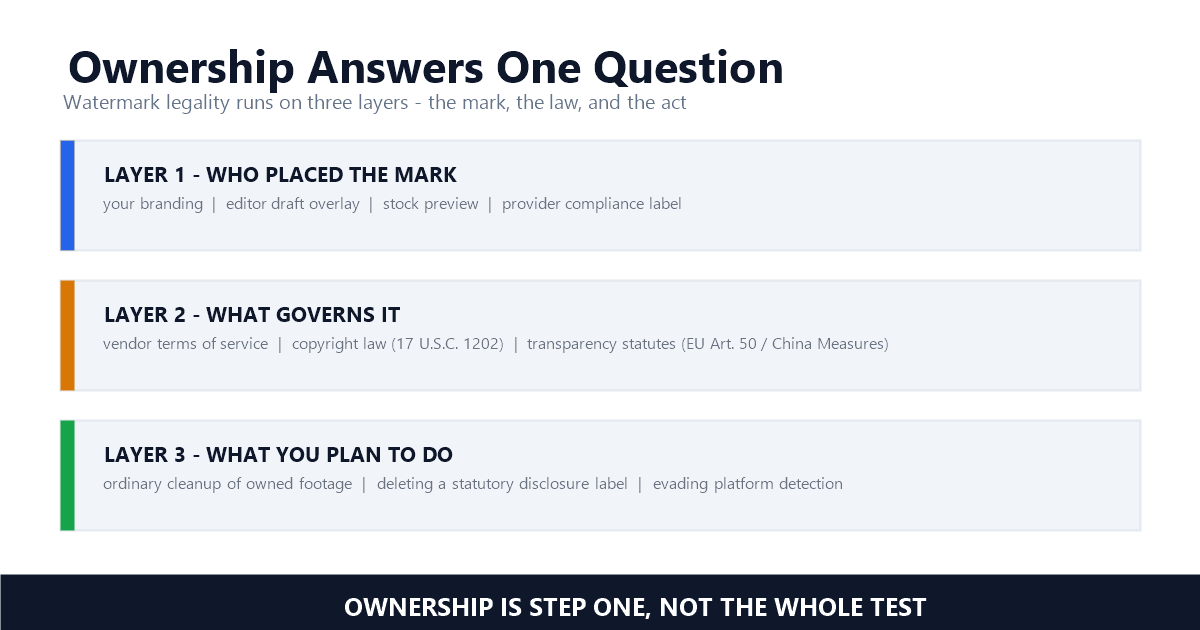
The creators who thrive in this environment are those who understand the distinction between visible and invisible watermarks. Removing visible branding for repurposing is legitimate and defensible. Stripping invisible provenance is increasingly risky — both legally and from a platform compliance perspective.
I've been building AI products for two decades — from mission-critical banking systems to the energy sector — and the current moment feels familiar. We're in the standard-setting phase of a new technology cycle, and the decisions made in 2026 will shape AI content provenance for years.
Here's what I predict for the next 12-18 months:
The trajectory is clear: provenance is becoming mandatory, not optional. The question isn't whether AI content will be marked — it's how. SynthID and C2PA will coexist, regulators will enforce, and creators who build provenance-preserving workflows now will be ahead of the curve.
UnMark's approach aligns with this trajectory. Our position is clear: we remove visible watermarks from AI-generated videos while preserving invisible provenance signals (SynthID and C2PA). This isn't just a technical feature — it's a compliance strategy. For a comparison of AI inpainting methods, see our technical breakdown of why inpainting outperforms cropping and blurring.
What UnMark does:
What UnMark does not do:
For Veo users specifically, UnMark provides a complete Veo watermark removal workflow that removes the visible logo while keeping SynthID intact. This means you can repurpose your Veo-generated content across platforms — Instagram Reels, YouTube Shorts, TikTok — while maintaining the provenance signals that regulators and platforms increasingly require. For an Instagram Reels watermark removal test, see our cross-platform repurposing analysis.
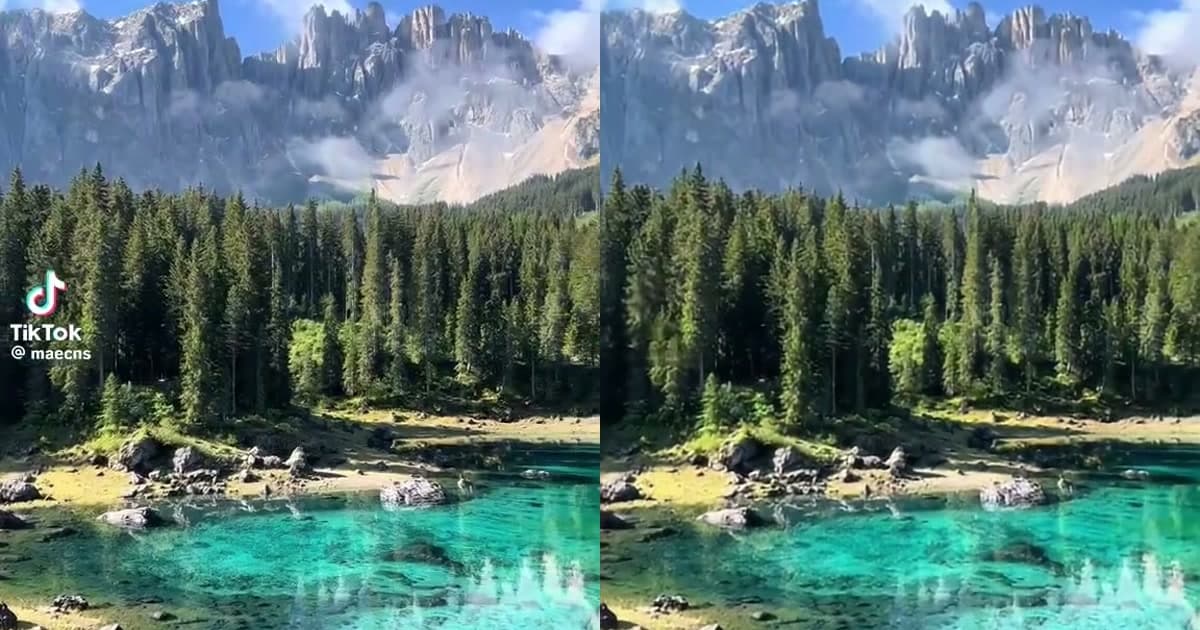
Want to see the provenance-preserving workflow in action? This 92-second recording captures a complete, unedited session of UnMark processing a Google Veo video — from upload through AI inpainting to final clean playback, with SynthID preserved throughout:
The 2026 AI video watermarking landscape is complex, but the principles are simple: remove what you don't need (visible branding), preserve what matters (invisible provenance), and stay on the right side of evolving regulation. Processing AI-generated videos through a provenance-preserving workflow helps ensure a compliant, future-proof content pipeline.
Author's note: I'm betting UnMark on one idea: remove the visible branding, keep the invisible provenance. That's the workflow that survives the next two years of regulation. — Mark Ma
Last updated: July 2026
For a deeper dive into where the underlying technology is heading, see our full analysis of AI video watermark removal technology trends reshaping 2026 — it covers the inpainting breakthroughs, cloud processing economics, and detection-removal arms race that define 2026.
Mark Ma is the founder and lead engineer at UnMark, where he leads the development of AI-powered video watermark removal technology. With over a decade of experience in computer vision, deep learning, and video processing, he has built production systems that process millions of frames per month across TikTok, Instagram Reels, and Google Veo content. His technical work focuses on motion-compensated watermark detection, spatial-temporal inpainting, and quality-preserving reconstruction for short-form vertical video. Before UnMark, Mark shipped computer vision infrastructure at scale for content moderation and ad compliance platforms. He writes this blog to document the real engineering, testing, and regulatory reasoning behind UnMark's processing pipeline — every test result, frame analysis, and benchmark published here is reproduced from actual production data, not synthetic examples. His goal is to give creators, brands, and regulators a verifiable technical reference for AI video watermark removal in 2026.