Google Veo Watermark Removal: Before/After Test Results (2026)
Real test of watermark removal on a Google Veo AI-generated video. Frame-by-frame comparison with actual data: resolution, bitrate, and quality before/after.
Mark Ma is the founder and lead engineer at UnMark, where he leads the development of AI-powered video watermark removal technology. With over a decade of experience in computer vision, deep learning, and video processing, he has built production systems that process millions of frames per month across TikTok, Instagram Reels, and Google Veo content. His technical work focuses on motion-compensated watermark detection, spatial-temporal inpainting, and quality-preserving reconstruction for short-form vertical video. Before UnMark, Mark shipped computer vision infrastructure at scale for content moderation and ad compliance platforms. He writes this blog to document the real engineering, testing, and regulatory reasoning behind UnMark's processing pipeline — every test result, frame analysis, and benchmark published here is reproduced from actual production data, not synthetic examples. His goal is to give creators, brands, and regulators a verifiable technical reference for AI video watermark removal in 2026.


Real test of watermark removal on a Google Veo AI-generated video. Frame-by-frame comparison with actual data: resolution, bitrate, and quality before/after.

InShot stamps free exports with its brand sticker, then offers two official exits: a 30-second ad or Pro. What the guides confirm and the tool market skips.

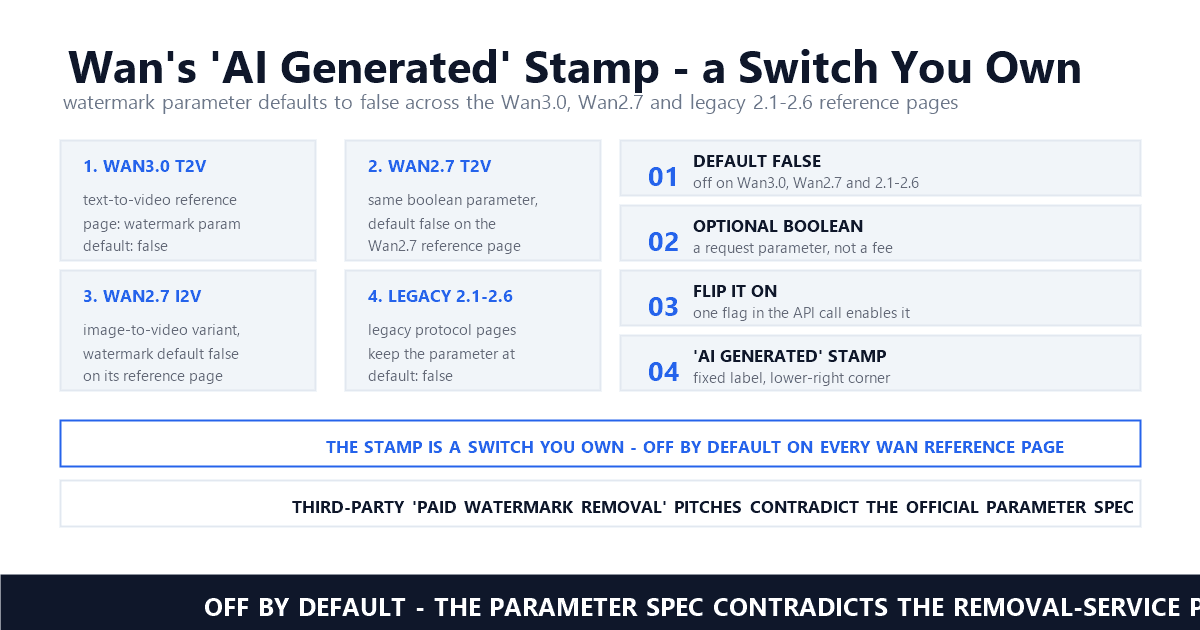
Paid tools sell removal for a stamp Alibaba's API adds only when you ask. Four Model Studio reference pages show the watermark parameter defaults to false.

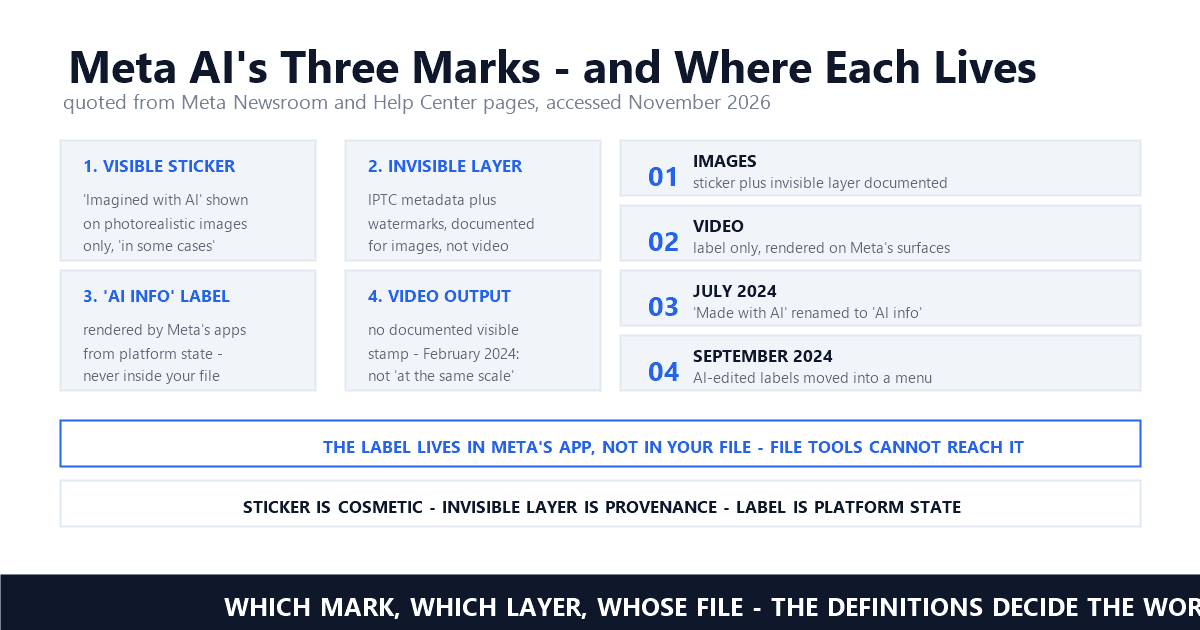
Search results sell removal for a mark nobody has defined. Meta's own posts show three different marks — and no documented watermark on Meta AI video output.

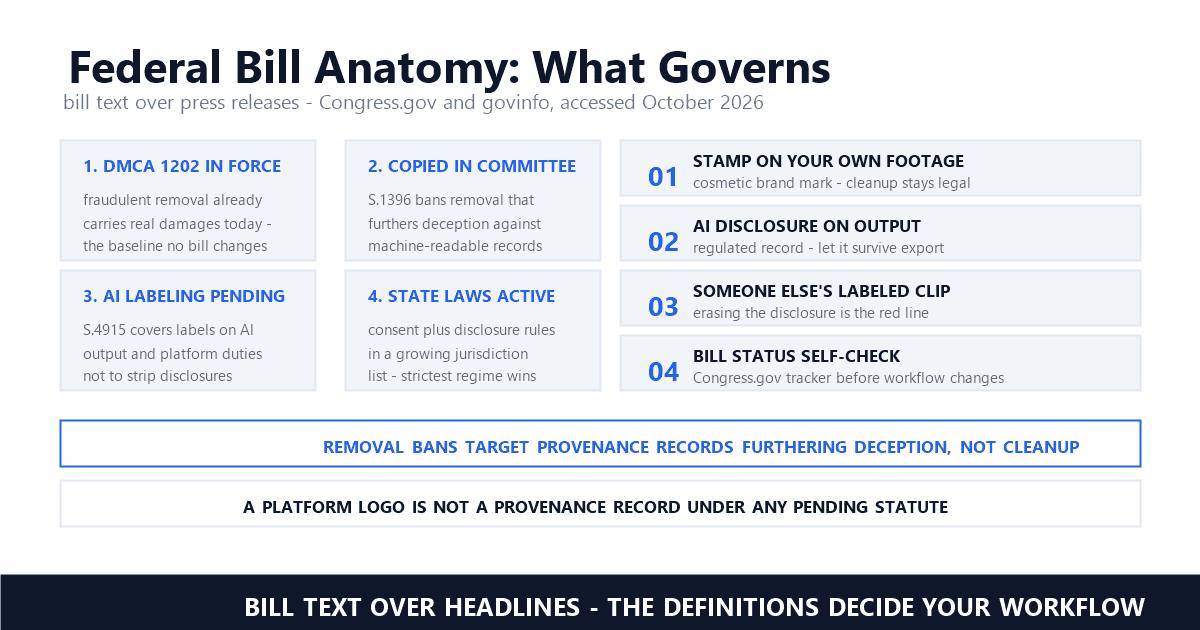
The COPIED Act outlaws removing provenance in service of deception, not everyday cleanup. What S.1396 and the AI Labeling Act of 2026 truly require.

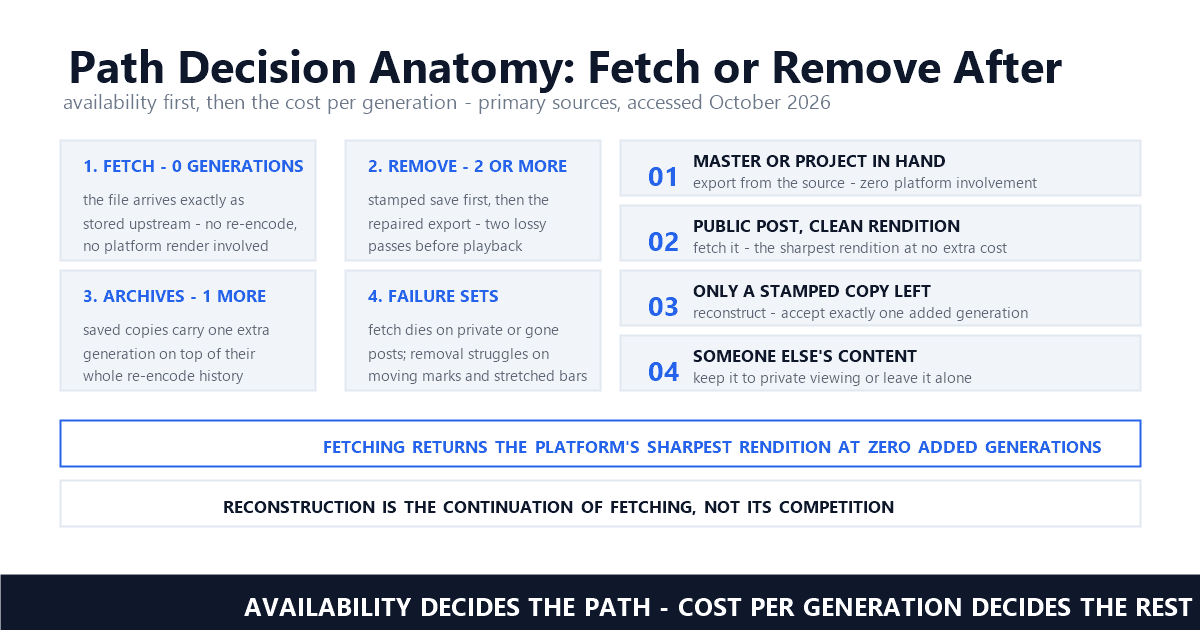
A clean-source fetch beats post-processing when the source exists. Availability, ownership, and per-generation quality cost decide the rest.

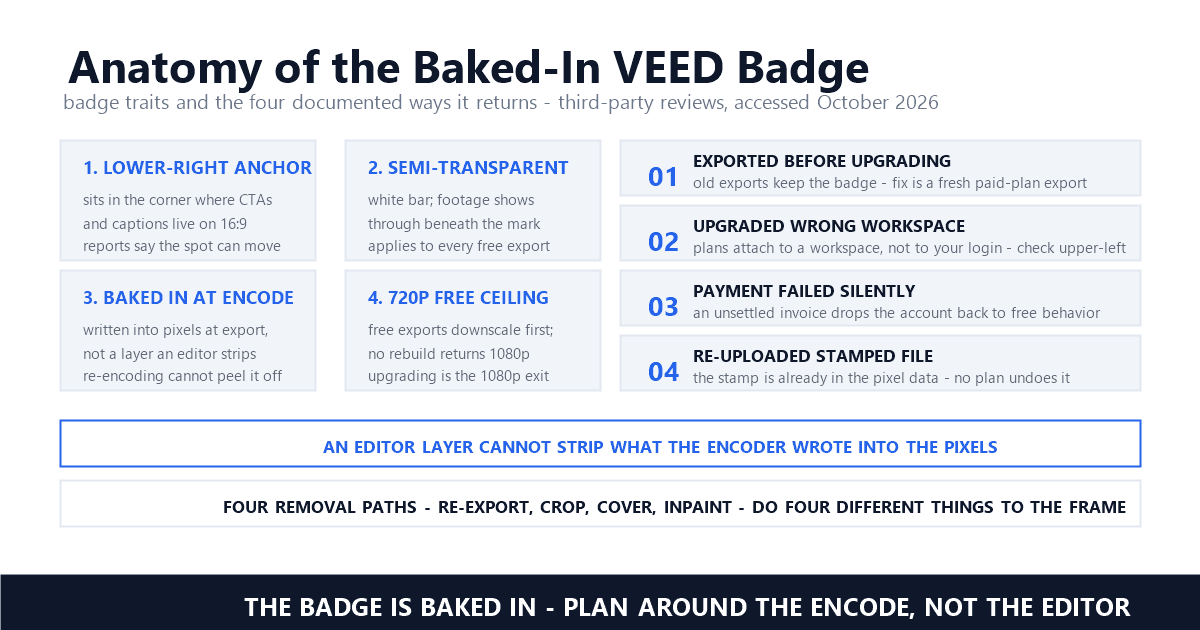
VEED's remover hides marks on uploads; the badge on free exports is baked in at encode. Crop, cover, upgrade, or reconstruct — four paths, four outcomes.

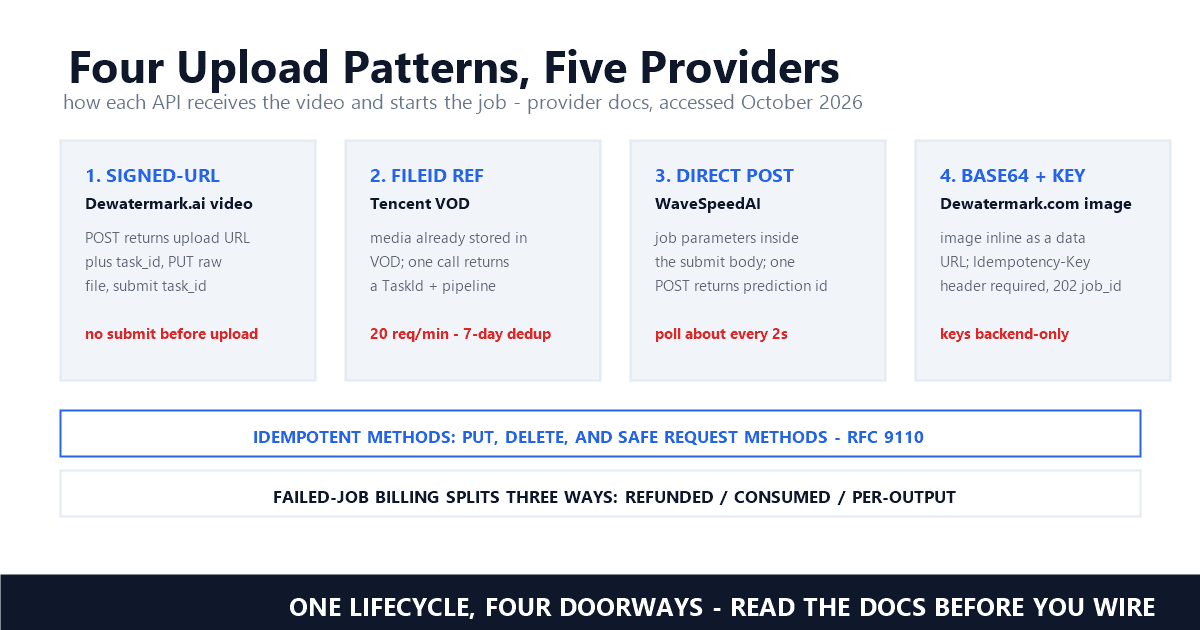
Five provider docs, four upload patterns, two terminal-state machines, and the idempotency header that decides whether your retries charge twice — sourced.

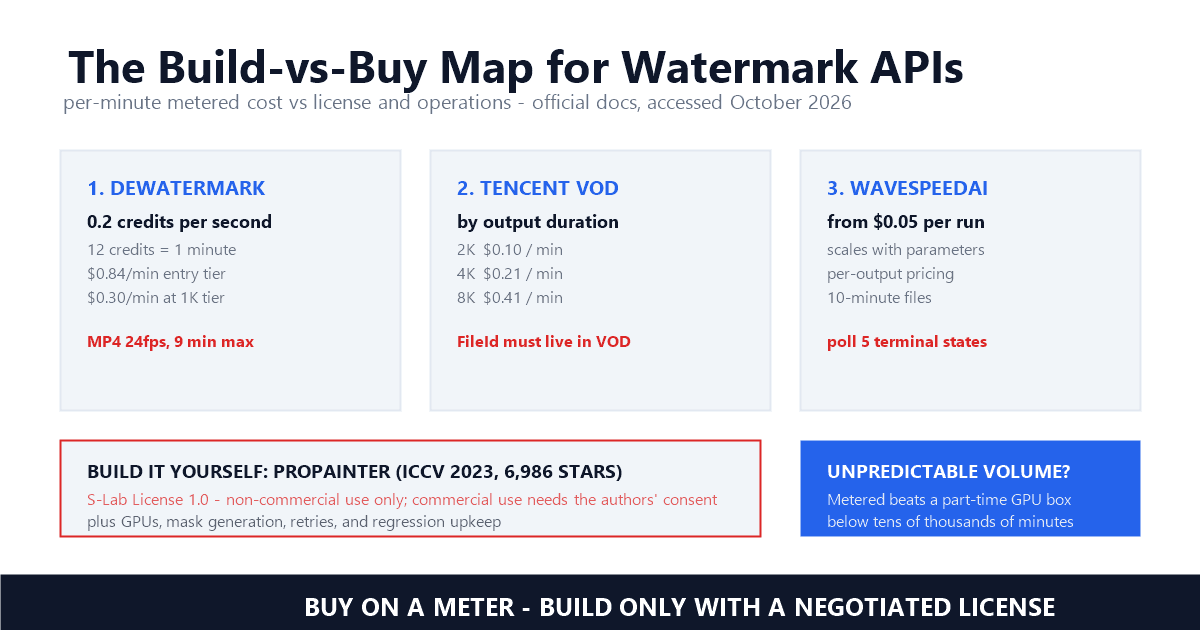
Three production APIs, real price tables, and one non-commercial license that reshapes the build-vs-buy math for video watermark removal — sourced.

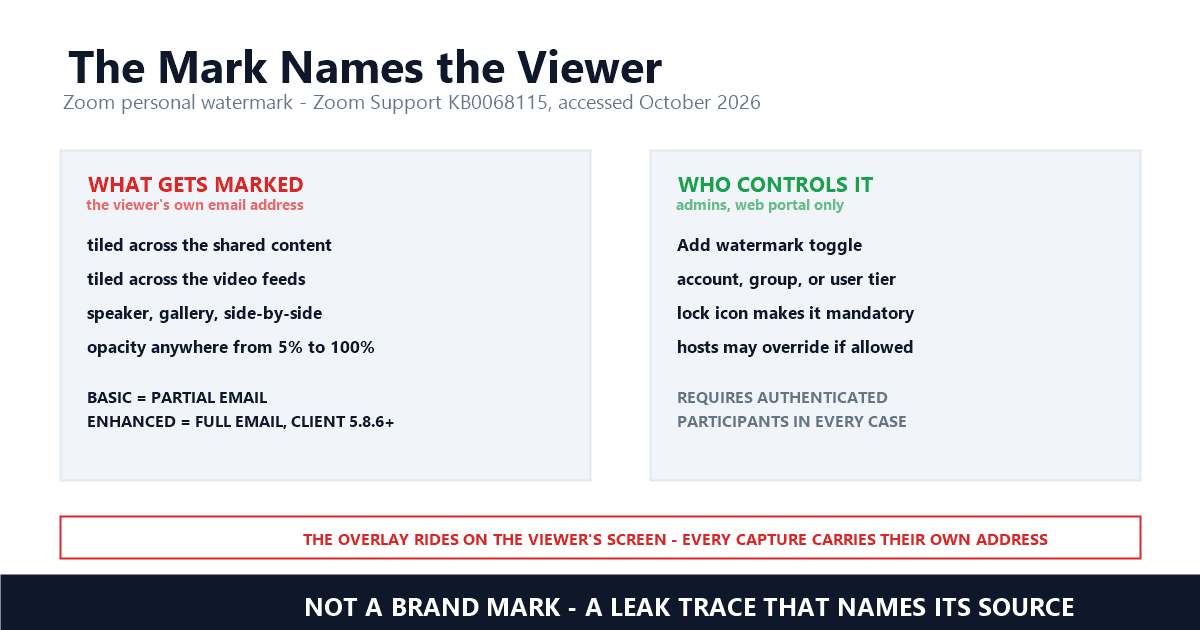
Zoom tiles each viewer's email across the session — a leak trace, not a brand mark. The toggles, Basic vs Enhanced, and the audio signature, sourced.

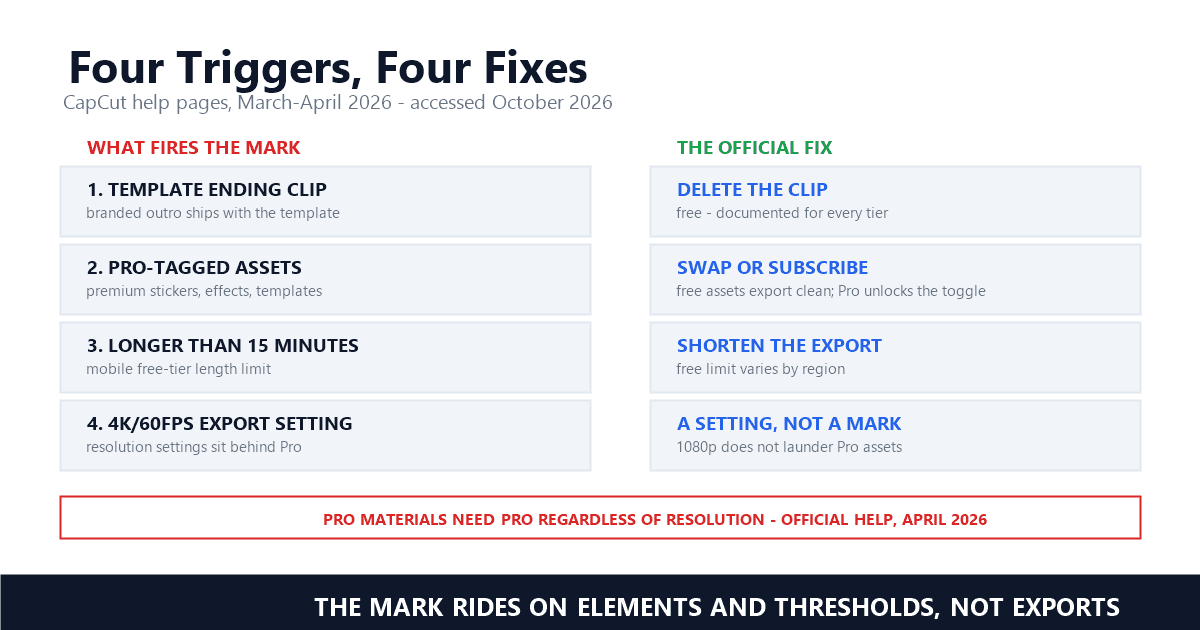
CapCut's help pages scatter the watermark answer across seven documents — ending clips, Pro gates, a Standard plan, an AI remover with an IP red line.

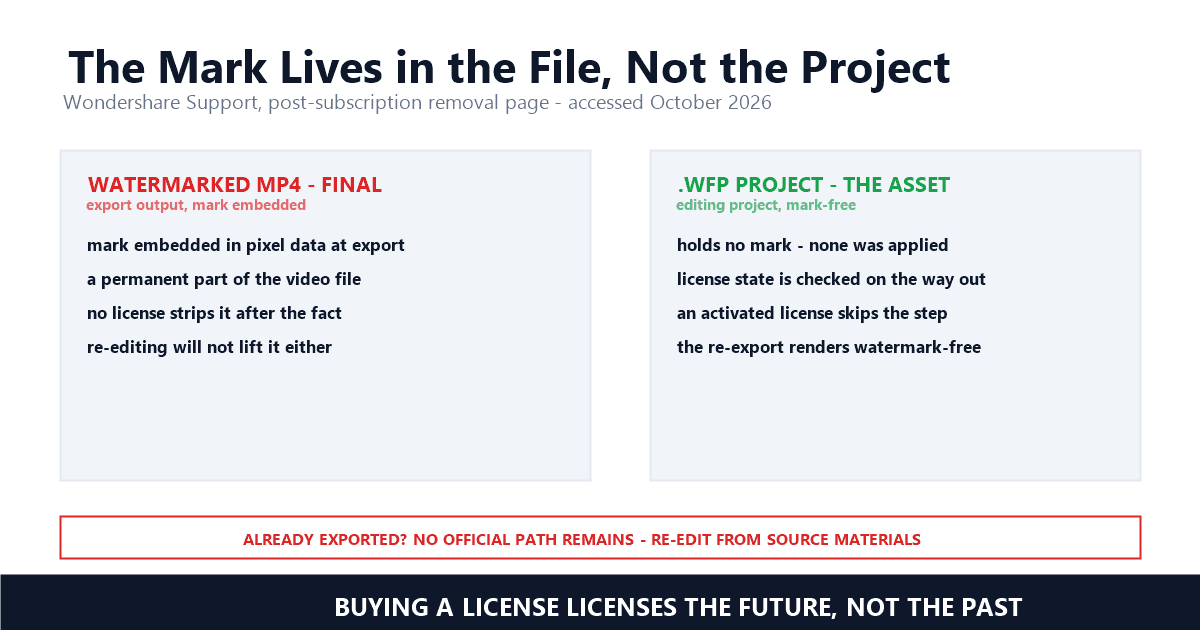
Filmora embeds its trial watermark into pixel data at export, and Wondershare's own pages call it permanent. The .wfp re-export paths and pricing, checked.